With the ever-increasing environmental awareness, more house owners are giving priority to eco-friendly materials when renovating their homes or constructing them. Flooring is a significant source of environmental contribution, given that it occupies a significant area of space in each house. The ability to select ecologically responsible and low-emission materials is going to decrease carbon footprint and ensure comfort and sustainability. The knowledge of Sustainable Flooring Options to Environmentally Conscious Homeowners enables people to make their living environments healthier without compromising aesthetics or functionality.
Sustainable flooring is concerned with renewable and lower waste, and durability.
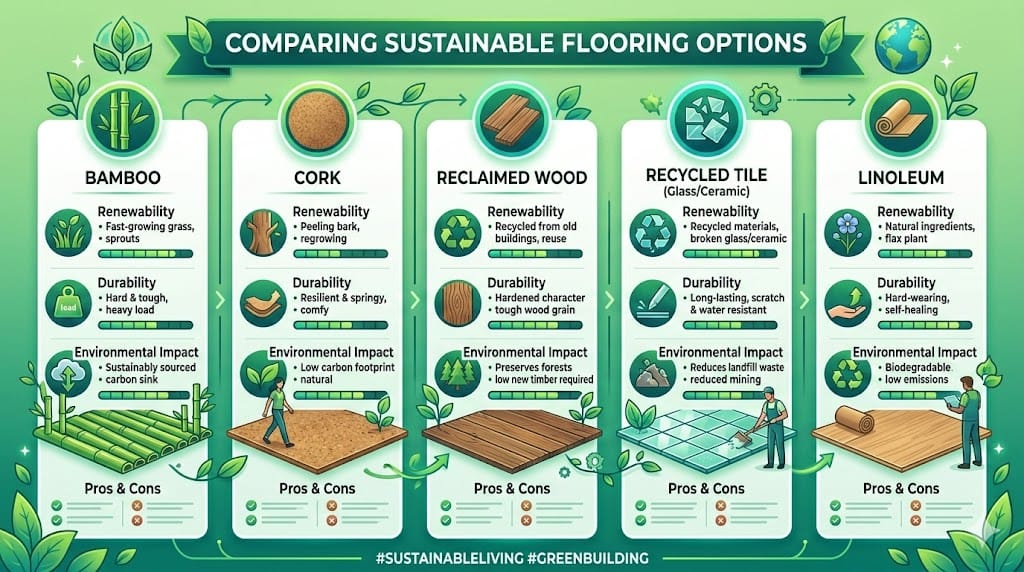
What will make flooring sustainable?
Not every green product is precisely friendly to the environment. Sustainable materials are therefore typically characterized by the following:
- raw materials that have been renewed or recycled.
- low volatile organic compounds (VOC) emissions
- accountable manufacturing processes.
- large life expectancy to minimize replacement rate.
- recyclability at end of life
The choice of good sustainable flooring materials will help in environmental conservation and indoor air quality.
Bamboo flooring
Bamboo is considered one of the quickest-growing renewable sources, and therefore, it is a common choice of eco-friendly flooring.
Benefits include:
- fast growth over hardwood trees.
- durability like hardwood.
- modern natural appearance
- resistance to moisture with proper treatment.
When properly sealed bamboo can be used in the living room, bedroom and even certain kitchens.
Cork flooring
Cork is extracted through the harvesting of the tree without having to cut the tree and hence it is very renewable.
Advantages:
- natural insulation characteristics.
- comfortable underfoot
- sound absorption
- hypoallergenic surface
Cork is perfect in the case of homeowners who want warmth and acoustical comfort.
Reclaimed hardwood
Reclaimed wood is a waste product that uses wood on old buildings, barns, and warehouses.
Environmental benefits:
- reduces deforestation
- stops usable wood going to the landfills.
- gives it individuality and background.
- extremely durable
Reclaimed hardwood is a blend of eco-friendliness and roughness.
Certified sourcing in engineered hardwood.
Engineered hardwood can be an ecologically friendly choice when sourced in an environmentally friendly manner.
Look for:
- established sustainable foresting labels.
- low-VOC adhesives
- durable finishes
- long product warranties
This solution is a compromise between the natural beauty and the better stability.
Recycled tile and stone
Recycled glass and reclaimed stone tiles minimize the use of resources.
Key benefits:
- high durability
- minimal maintenance
- water resistance
- long lifespan
Such materials are perfect in kitchens, bathrooms and entryways.
Linoleum produced using natural materials.
Vinyl, in comparison, is manufactured using natural substances like linseed oil, cork dust, and wood flour like traditional linoleum.
Advantages:
- biodegradable composition
- antibacterial properties
- wide range of colors
- long-lasting performance
Still unnoticed but one of the surest sustainable floors is linoleum.
Reliable Solutions for Texans by LFC Texas
When Texans need dependable, high‑quality services they can trust, LFC Texas delivers professional solutions with a focus on customer satisfaction and long‑lasting results. From expert support to tailored offerings designed to meet your unique needs, LFC Texas combines experience and commitment to help you get the best outcomes possible. Whether you’re researching services or ready to take the next step, learn more about how LFC Texas can support your goals by visiting LFCTexas your resource for trusted expertise and exceptional service throughout Texas.
Considerations of indoor air quality.
Green homeowners ought to pay more attention to low-VOC materials. The high concentrations of VOCs may be a source of low indoor air quality and health issues.
Look for:
- emission labels are certified as low.
- water-based finishes
- non-toxic adhesives
- permeable underlayment materials that are sustainable.
The great benefits of using Sustainable Flooring Options as the Eco-Conscious Homeowners include healthy indoor environments.
Sustainability comparison table
| Flooring Type | Renewable | Durability | Ideal Areas |
| Bamboo | Yes | High | Living areas |
| Cork | Yes | Moderate | Bedrooms, offices |
| Reclaimed wood | Yes | Very high | Living spaces |
| Recycled tile | Partially | Very high | Bathrooms, kitchens |
| Linoleum | Yes | High | Kitchens, hallways |
Durability and lifecycle effect.
Sustainability does not only relate to raw materials, but also lifespan. The use of durable floors leads to a decrease in the frequency of replacement, waste is minimized, and manufacturing is minimized.
Long-lasting materials:
- reduced environmental impact in the long-term.
- minimize the rates of renovation.
- save money over time
Eco-friendly decisions should always involve durability.
How to maintain environmentally friendly floors.
- clean with mild non-toxic detergents.
- prevent excessive exposure to water.
- recycle wood rather than recycle.
- fix minor injuries in a short time.
- keep the humidity at a steady level.
Sustainable materials have longer lifespan when taken care of.
Cost comparison and long-term value
| Flooring Option | Initial Cost | Long-Term Value |
| Bamboo | Moderate | High |
| Cork | Moderate | Moderate |
| Reclaimed wood | High | Very high |
| Recycled tile | Moderate–High | Very high |
| Linoleum | Moderate | High |
While some options cost more upfront, their longevity and performance justify the investment.
Bad decisions that are made when selecting eco flooring.
- focusing only on appearance
- disregard of product certifications.
- making poor choices of imitations.
- ignoring installation materials.
- not planning maintenance in the long term.
Good sustainability is attained through diligent research.
Why sustainable flooring is better at adding value to the home.
Modern buyers are concerned with efficiency and health, and environmental upgrades appeal to them. Sustainable materials are materials that do not harm the environment through careless construction.
Homes that have environmentally friendly flooring usually enjoy:
- improved resale appeal
- better energy efficiency
- better living conditions.
- enhanced design uniqueness
Final thought
Sustainable flooring is not merely a fashion but a promise of sustainability and eco-friendliness towards the environment. Homeowners would be able to minimize their impact on the environment and increase comfort and style through the choice of renewable materials, low-emission finishes, and durable products. Considerable decisions now will help in making healthier homes and a more sustainable future.