The quality of your indoor environment is significantly larger in regard to the health of your family than most houses. The materials in your home house and the concealed contaminants are usually the source of dust, chemicals, dampness and unseen pollutants, and chiefly, floors. The selection of the appropriate surfaces can severely decrease allergens and dangerous emissions.
We are going to discuss in this guide the useful flooring solutions, intelligent installing practices, and maintenance hints that contribute to healthier living, as well as demonstrate how IAQ Flooring can establish a tangible difference in the comfort one enjoys in their daily life.
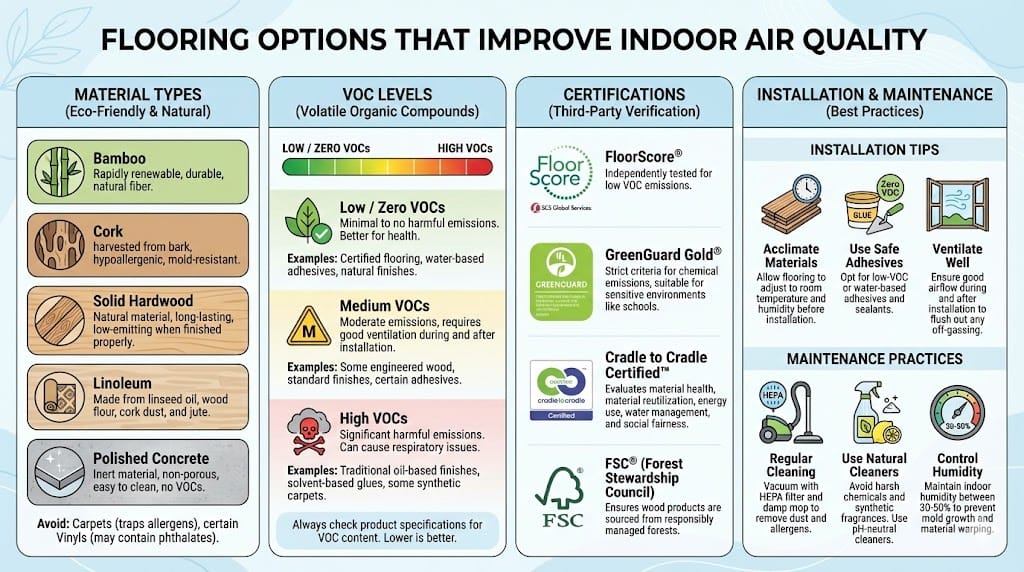
The reason why flooring affects indoor air quality
Most conventional floor covering releases volatile organic compounds (VOCs) as time progresses. These gases are often manufactured by adhesives, finishes and artificial materials and are the cause of headaches, breathing problems and overall indoor pollutants.
Carpets can trap:
- pet dander
- pollen
- mold spores
- fine dust particles
Failure to keep moisture covered beneath floors, which are poorly installed, may also cause development of molds making allergies and asthma increasingly bad.
It is the reason why homeowners are ranking IAQ Flooring among the aspects that they place high importance on renovating or the construction of new houses.
The most appropriate flooring materials
On the one hand, the best most useful materials to help clean the air and feel comfortable in the long run are examined.
1.Solid hardwood (low-VOC finish)
The current hardwood products, which have water based finishes and lack formaldehyde in their cores are much safer than the older products. They do not entrap allergens and they are cleanable.
Related benefits:
- long lifespan
- minimal off-gassing
- green certifications do not conflict with it.
2.Cork flooring
Cork is resistant to mold, mildew and bacteria. It is grown in a pro-sustainable way, and it does not have harmful fibers. The soft structure also decreases the motions of dust airborn.
3.Bamboo flooring
Bamboo has the same durability as hardwood but it can grow very fast as a renewable resource. Check the labels of products with low-emission and floorScore or GREENGUARD certification.
4.Linoleum (natural, not vinyl)
Linoleum is produced with the use of linseed oil, wood flour, and jute backing to get true linoleum. It is free of PVC and emissions are very low in comparison to synthetic ones.
5.Ceramic or porcelain tile
Tile does not give out chemicals, does not absorb smells and it is very resistant to moisture accumulation. Tile is a frequently used and one of the cleanest options in cases of a family with an allergy sensitivity.
In the choice of materials, IAQ Flooring would assist in deleting the hidden areas of indoor pollution which many house owners fail to consider.
Resources to be carefully choose
Certain products can be used safely but are to be very carefully chosen:
- poor-laminate that consists of high levels of formaldehyde.
- wall-to-wall carpet, heavy chemical backed.
- vinyl plasticsized and powerful adhesive flooring.
You can find certified low-VOC products and professional installation with non-toxic adhesives in case you like these styles.
Labels that are important in certification
Green labels do not carry an equal connotation. These certifications are known on performance of indoor air quality:
- GREENGUARD Gold – very low chemical emission.
- FloorScore – complies with the indoor air quality requirements.
- FSC certification- environmentally friendly wood sourcing.
- Flexible materials free of phthalates – safer.
The presence of at least one of these third-party certifications on the label of a quality IAQ Flooring product will be obvious.
Installation is important; more than most individuals believe
Even quality flooring can destroy indoor air quality when it is installed in a bad manner.
Important practices of installation are:
- low-VOC or zero-VOC adhesives
- sealers and finishes made of water.
- before installation dry test moisture.
- allowing the off-gassing period before occupancy.
Poor subfloor preparation may lead to entrapment and development of microorganisms under the surface which is a long term air quality issue.
Installation of IAQ Flooring is carried out by professionals which lowers the trap effects of the pollutants and chemical exposures.
Regular maintenances that make the air clean
Simple but periodical care of the floors is necessary:
- dry mopping in order to minimize airborne particles.
- HEPA Vacuuming of the area mats and rugs.
- fast spill clean to avoid absorption of moisture.
- using non-harsher chemical cleansers.
Plant-based or natural cleaners can be used in order to avoid the entry of more airborne toxins in your home.
Comparison table – healthiest flooring options
| Flooring Type | VOC Emissions | Allergy Friendly | Moisture Resistance | Maintenance Level |
| Hardwood (low-VOC) | Very Low | High | Medium | Medium |
| Cork | Very Low | High | Medium | Low |
| Bamboo | Low | High | Medium | Medium |
| Natural Linoleum | Very Low | High | High | Low |
| Ceramic Tile | None | Very High | Very High | Very Low |
Whom do cleaner flooring options advantage most of all?
The most advantaged homes will be those that have:
- families are those with small kids.
- households with pets
- asthma or allergy sufferers
- elderly residents
- outer city homes that are subjected to outdoor pollution.
Under such conditions, the use of IAQ Flooring assists to provide a safer and more comfortable day-to-day living.
For premium floor and cabinets, contact LFCTexas
Final Thought
The kind of flooring you use does not simply have an impact on the way your house looks, but also has a direct impact on the air your family inhales on a daily basis. Homeowners can minimize allergens, odors, and the exposure of the selected materials, installation techniques, and the maintenance of all surfaces to significantly decrease the risk of exposure to chemicals. IAQ Flooring is not a mere design choice, but a healthy investment in the future of living and the level of comfort in the home.