 Skip to content
Most individuals when selecting the flooring in their homes or offices consider the color, the material and the feeling. Nevertheless, there is one important aspect, which should not be ignored by people, and it is lighting. The appearance of the same floor may change drastically based on the nature, strength and the direction of the light in the room.
Knowledge about the color of a flooring under lighting changing with the time of the day can make the homeowners and designers smarter in their choice of the flooring. Lighting also contributes significantly to the appearance of the floor whether you are laying hardwood, laminate, vinyl, or tile.
The importance of lighting effect to Flooring
Lighting influences a floor surface in terms of color, grains and textures. Natural sunlight, LED lighting and warm incandescent lighting have internal relations with the flooring materials.
The reasons why it is important to have lighting:
- It alters the appearance of the color of flooring.
- It brings out or conceals grain patterns and textures.
- It has an effect on the high end feel of the interior design.
- It influences the size or diminutive size of a room.
In the case of luxury flooring design the lighting could be used to increase the sophistication or a high-end floor would appear boring.
Natural Light vs Artificial Light
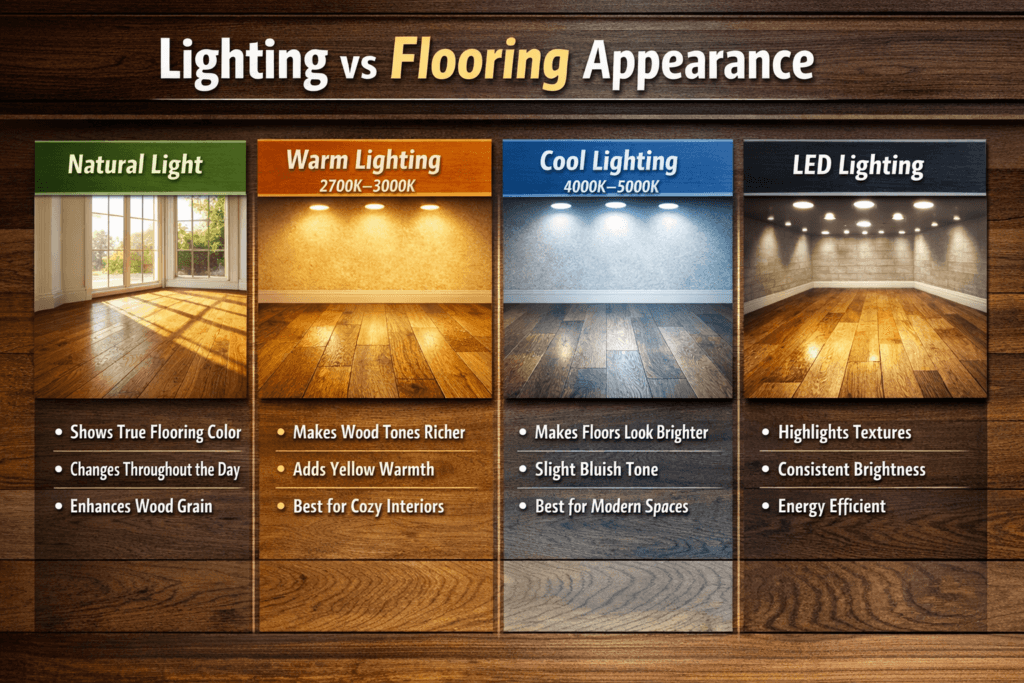
When analyzing the flooring color under lighting, one should understand what the distinction between natural and artificial lighting is.
| Lighting Type | Effect on Flooring |
| Natural Sunlight | Shows the most accurate color but changes throughout the day |
| Warm Lighting (2700K–3000K) | Adds a yellow tone, making wood floors appear warmer |
| Cool Lighting (4000K–5000K) | Creates a brighter and slightly bluish appearance |
| LED Lighting | Highlights textures and grains clearly |
Large window rooms are also known to change color during the day, particularly on a hardwood floor.
If you’re planning to upgrade your floors and want a professional finish that looks great under every lighting effect, choosing the right installation team is just as important as selecting the flooring itself. At Luxury Flooring Company Texas, experienced specialists help homeowners select materials and finishes that maintain their beauty in both natural and artificial lighting. Whether you’re installing hardwood, laminate, or luxury vinyl, the experts at LFC Texas ensure your flooring enhances the overall appearance and value of your home.
Reaction of Different lighting effect on flooring
Light Flooring
Light floors like oak, maple or white-washed wood reflect more light.
Benefits:
- Enlarged the rooms and made them bright.
- Operates in dark locations.
- Produces a contemporary or Scandinavian design.
Very light flooring may however look rather bleached out under intense sunlight.
Dark Flooring
Darker floors like walnut or espresso hardwood, are more light absorbing.
Pros:
- Develops a posh and dramatic interior.
- Furniture and decor.
Cons:
- Scratches, dust and pet hair are easier to portray.
- Is able to make small rooms look smaller when there is poor lighting.
Dark floors require good lighting on the time of installation.
Medium-Tone Flooring
Natural oak or hickory flooring is medium toned flooring and is the most versatile.
Advantages:
- Equal look in the varying light conditions.
- Uses warm and cold lighting systems.
This tends to be the safest option to the homeowners who are uncertain about the state of lighting.
Direction of Light Matters
The appearance of the flooring is also affected not only by the type of light but also by the direction.
- North orientation rooms: Behind lighter, floors can look dark.
- South rooms: Rooms are warm in the sunlight, colors are more vivid.
- East window rooms: Morning sunshine.
- West rooms: brilliant evening light.
It is always advisable that interior designers should test flooring samples in the room at various time of the day.
Lighting tips on how to choose the Flooring
Test Samples First
Flooring samples must be placed in your room always but observe them in the morning, afternoon and evening.
Flooring Matching Lighting Temperature.
Warm lights are used on warm wood floors such as oak and cherry.
Consider Window Placement
The flooring color would change drastically under the daylight lighting on the rooms with big windows.
Use Layered Lighting
Blend the ceiling lights, floor lights and wall lights to even out the room.
Lighting Trick applied to Luxury Flooring Design
Luxury interior designers are strategic and apply lighting to improve flooring.
Some of the common methods are:
- Essentially low-key lighting to emphasize hardwood grain.
- Baseboard LED strip lighting.
- Huge windows to reflect natural light.
- Matt finishes to diminish glare.
These methods render high-quality flooring material to be more decorative and beautiful.
Financial errors that homeowners commit.
Most homeowners make decisions on flooring at the showrooms without bothering about the availability of lighting at home.
Common mistakes include:
- Choosing flooring with bright light in the showrooms.
- Disregard of natural sunlight direction.
- Incorrect use of bulb temperature.
- Failure to test flooring samples under actual circumstances.
These errors can be avoided and the flooring will appear just like it is supposed to look like after installation.
Final Thoughts
The use of lighting is like a potent force in the appearance of the flooring in a room. Depending on the type of interaction between the color of the flooring under the lighting, it may change the appearance, tone, and quality of a room.
Homeowners can have more balanced and luxurious interior design by giving attention to lighting types, room direction, and flooring tones before installing.
When the flooring is selected well, the lightings in that area can help in enhancing the whole look of a house.
