
Differentiation of the flooring does not only come down to color and style. Flooring thickness is one of the most neglected, but still very important aspects. It has a direct effect on durability, comfort, insulation and even on installations cost. When renovating a house, or on a commercial building, knowing the thickness of flooring can guide you to make wiser choices that are long term.
What Is Flooring Thickness?
The thickness of flooring is the thickness of a flooring material between the two surfaces, sometimes in millimeters (mm) or inches. There are various types of flooring that have varying thicknesses according to their material and construction.
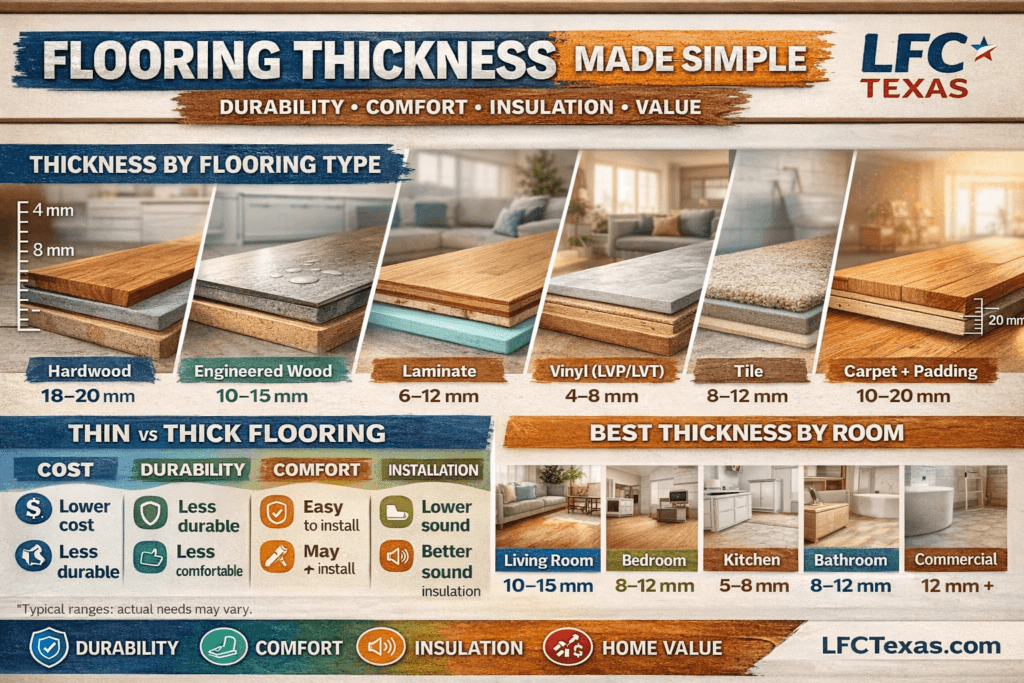
The value of Flooring Thickness
Durability and Lifespan
Thick flooring will be more resistant and durable to wear and tear. As an example, heavy foot traffic and dents or scratches are more resistant to thinner vinyl or laminate flooring.
Comfort Underfoot
Floors that are heavier are better cushioned and are therefore more comfortable to walk on-particularly in the living room and bedrooms.
Sound Insulation
A heavier floor is more sound absorbing, and the difference in noise between floors is minimized with multi-story homes or apartments.
Thermal Insulation
Thicker flooring is easier to keep the heat in and this makes your space more energy-efficient and comfortable.
Subfloor Compatibility
If your sub floor has some small imperfections, flooring can be used which is thicker and will conceal any imperfection and give a more smoother appearance.
Standard Thickness by Flooring Type
| Flooring Type | Typical Thickness Range | Best For |
| Hardwood Flooring | 18–20 mm | Long-term durability, resale |
| Engineered Wood | 10–15 mm | Stability with natural look |
| Laminate Flooring | 6–12 mm | Budget-friendly durability |
| Vinyl (LVP/LVT) | 4–8 mm | Waterproof areas |
| Tile Flooring | 8–12 mm | Bathrooms, kitchens |
| Carpet + Underlay | 10–20 mm | Comfort and insulation |
Thin vs Thick Flooring: Key Differences
| Feature | Thin Flooring | Thick Flooring |
| Cost | More affordable | Higher upfront cost |
| Durability | Moderate | High |
| Comfort | Less cushioning | More comfortable |
| Installation | Easier | May require adjustments |
| Sound Insulation | Low | Better |
Ideal Thickness in varying rooms
Living Room: 10-15 mm (engineered wood or laminate) to be durable, comfortable.
Bedroom: 8-12 mm softer underfoot.
Kitchen: Waterproof water vinyl 5-8 mm.
Bathroom: 8-12 mm moisture protection tiles.
Commercial Spaces: 12 mm+ high resistance to foot traffic.
The appropriate thickness
In choosing the thickness of floors, take into account the following factors:
Foot Traffic: Busy places should have denser floor covering.
Subfloor Conditions: Unlevelled floors should use thicker material.
Budget: Strike a balance between cost and thickness.
Installation Type: Floating floors vs glued floors can differ in their requirement of thickness.
Room Function: Comfort vs durability requirements
Common Mistakes to Avoid
Selecting thin flooring to save on money.
Lack of concern about subfloor condition.
Failure to think of door clearance and transitions.
Ignoring the underlayment effect on overall thickness.
Choosing the right flooring thickness is just one part of building a perfect space. At LFC Texas, we guide homeowners and businesses in selecting flooring that balances durability, comfort, and style. Explore our flooring solutions to find the right fit for your project and ensure long-lasting performance.
Conclusion
The thickness of flooring is very important regarding the overall performance and durability of your floors. Though thicker flooring will be more durable, comfortable and offer more insulation, what you need will be the best, depending on your needs, budget, and space requirements. Knowing the impact of thickness on performance, you can be assured of selecting the appropriate flooring to use in each room of your home or project.