
The flooring that is considered to be the most luxurious and most durable is natural stone flooring. It introduces eternal beauty, innovative designs and durability into residential and commercial environments. Marble, granite, and travertine are considered to be among the most popular ones, each of which is different in its features, advantages, and care requirements.
The following guide will make you see the differences so that you could pick the right natural stone flooring to your space.
What Is Natural Stone Flooring?
Natural stone flooring comes out of a quarried rock that is sliced, finished and polished into a tile or a slab. In contrast to man-made materials, every piece of stone is distinctive, and it is possible to find a natural difference in color texture and pattern.
Key Benefits:
- Sustainable (can take decades) lifetime.
- Adds property value
- Natural and eco-friendly
- Unique aesthetics
Marble Flooring
Overview
Marble has been associated with fine veining and affluent look. It has been applied in palaces, monuments, and the upscale accommodation since centuries.
Features:
- Smooth and polished surface
- Distinct veining patterns
- Light and neutral colors available.
Pros:
- Premium, high-end look
- Natural cool surface (suits warm climates well)
- Adds resale value
Cons:
- Easy to scratch and stain.
- Requires regular sealing
- Higher cost
Best For:
- Living rooms
- Bathrooms
- Entryways
Granite Flooring
Overview
Granite is a substance that is resistant to the movement of people and therefore it is ideal in high traffic places. It has a more granular look than marble.
Features:
- Extremely durable
- Scratch and heat resistant
- Wide range of colors
Pros:
- Low maintenance
- Very wear and tear resistance.
- Fits both outdoor and indoors.
Cons:
- Massive and cumbersome to set up.
- Ability to experience cold and hard footing.
- Seals (and less often than marble) are required.
Best For:
- Kitchens
- Hallways
- Commercial spaces
Travertine Flooring
Overview
Travertine is a limestone rock that has a natural texture and a natural color. It creates a warm, rustic feel.
Features:
- Uneven surface having natural pits.
- Soft, matte finish
- Beige, cream, and tan shades
Pros:
- Non-slip surface
- Inexpensive relative to marble.
- Comfortable underfoot
Cons:
- Requires frequent sealing
- Prone to wet destruction.
- Maintenance and fill-up of needs.
Best For:
- Outdoor patios
- Bathrooms
- Rustic interiors
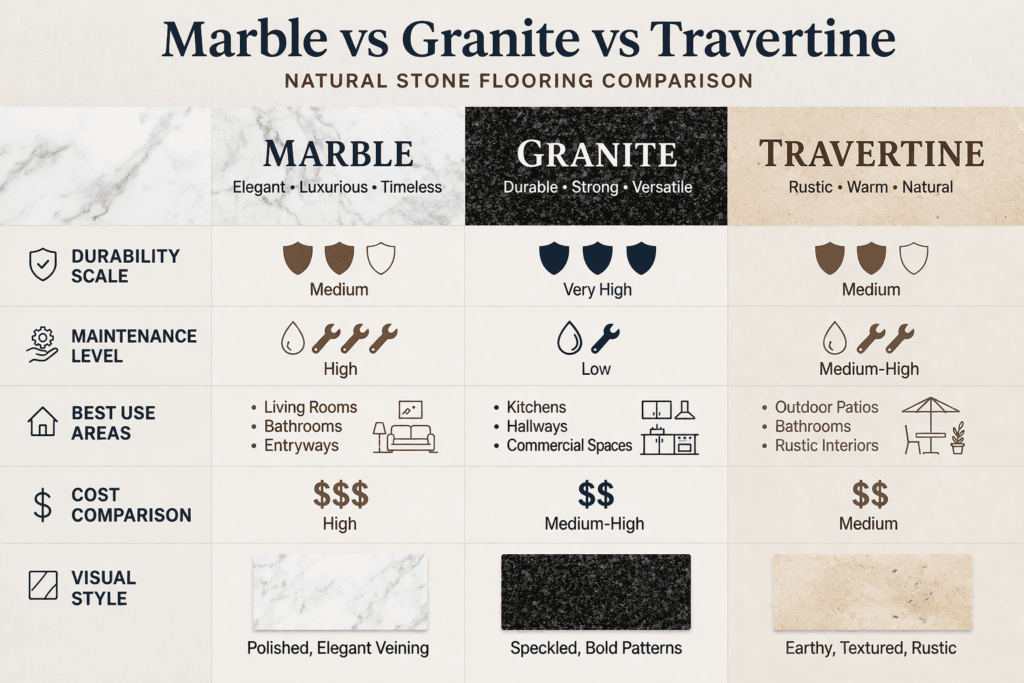
Comparison Table
| Feature | Marble | Granite | Travertine |
| Durability | Medium | Very High | Medium |
| Maintenance | High | Low | Medium-High |
| Appearance | Elegant, veined | Speckled, bold | Rustic, natural |
| Water Resistance | Low | High | Medium |
| Cost | High | Medium-High | Medium |
| Best Use | Luxury interiors | High-traffic areas | Outdoor & rustic |
Installation Considerations
There are several things to be considered before laying natural stone flooring:
Preparation of subfloor is essential to stability.
Weight and precision Professional installers are required.
Proper sealing is to be taken care of after installation.
Take into account compatibility of underfloor heating.
Maintenance Tips
To maintain your natural stone flooring in an excellent state:
Wash frequently using a ph-neutral wash.
Models to avoid include acidic substances such as vinegar.
Periodically cover surface.
Apply carpets and floor mats in busy places.
Which One Should You Choose?
When it comes to using marble, granite, or travertine, it is a matter of need:
Select marble to be luxurious and elegant.
Select granite because it is durable and easy to maintain.
Select travertine and have a warm natural look.
Choosing the right natural stone flooring can transform your space, but expert guidance makes all the difference. At lfctexas, you’ll find professional flooring solutions, installation services, and tailored advice to help you select the perfect marble, granite, or travertine flooring for long-lasting beauty, durability, and performance in your home or business.
Conclusion
Natural stone flooring is a classic investment that will increase the beauty and functionality. It is a matter of choice in terms of marble, which is elegant, granite, which is strong, or even travertine, which is warm. With the knowledge of their differences and their maintenance needs, you can be sure and sure that you have chosen the perfect flooring to put on your space.